What lungeing is, when it helps and 4 ways to start using it
 Save
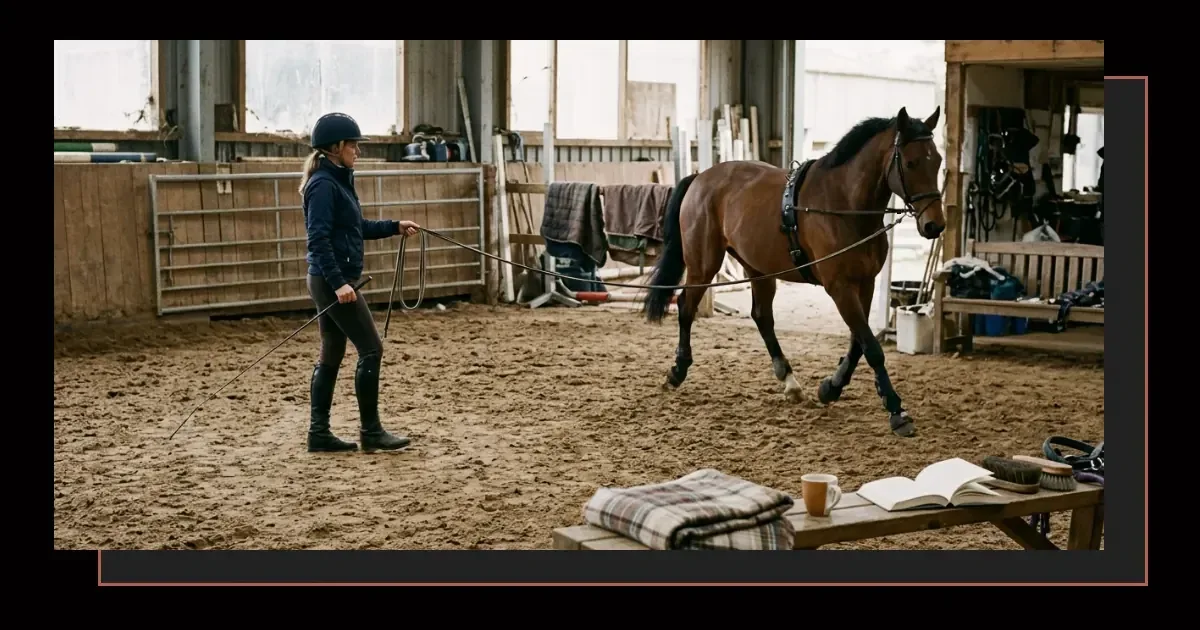
Lungeing is the practice of working a horse on a long line while it moves in a circle around you, usually in an arena or enclosed space. The handler stays in the centre and directs the horse's pace, gait and direction using voice commands, body language and a lunge line. It builds fitness, improves balance and lets you observe how the horse moves without the weight of a rider. You will find it used in Area 18 Riding as a training tool, a warm-up before ridden work and a way for novice riders to watch their horse move from the ground.
How lungeing works in practice
The horse wears a headcollar or bridle, and a lunge line clips to the noseband or bit ring. You stand in the middle of the circle holding the line in one hand and a lunge whip in the other. The whip is not for striking — it encourages forward movement through position and gentle flicks toward the horse's hind legs. A circle roughly the diameter of half a small arena gives enough space for the horse to move freely without straining joints.
Voice commands signal transitions: walk, trot, canter and halt. Most horses learn these quickly through repetition. Your body position matters — stepping slightly forward encourages the horse to move on, stepping back asks it to slow down. The line stays light in your hand, not tight or slack.
When lunge work benefits the horse
Young horses learning to respond to voice commands often start with lungeing before anyone sits on them. It teaches them to carry themselves in balance without the complication of a rider's weight. An older horse coming back into work after a break may lunge for several sessions to rebuild muscle and stamina before ridden exercise resumes.
Lungeing also reveals how the horse moves. A limp, uneven stride or reluctance to bend one way becomes obvious when you watch from the centre. That information helps an instructor or vet decide what attention the horse needs. On competition days, a short lunge session before tacking up can settle a fresh horse and loosen tight muscles.
Fitness without the saddle
Some horses benefit from cardiovascular work without carrying a rider. A horse recovering from a back injury, for example, may lunge at walk and trot while ridden work is still restricted. Controlled lunge work keeps the heart and lungs engaged and prevents the horse from becoming unfit during rest.
When lungeing helps the rider
Riders working on their seat and balance sometimes take lunge lessons. The instructor controls the horse while the rider focuses entirely on posture, breathing and feeling the horse's movement. Without reins to hold or steering to manage, you notice more about how your body shifts in the saddle. Your first riding lesson may include a short lunge session for this reason.
Experienced riders use lunge lessons to refine specific skills — a more secure lower leg, a softer elbow, a straighter back. The instructor can see everything from the ground and call out adjustments in real time.
Equipment you need to lunge safely
A lunge line between eight and ten metres long gives enough length without excess slack dragging on the ground. Cotton or woven nylon lines are easier on your hands than thin rope. The lunge whip should be long enough that you can reach the horse's hindquarters from the centre without stepping out of position.
Side reins or a training aid may be added once the horse lunges calmly. These attach from the bit to the saddle or a roller and encourage the horse to stretch into a rounder outline. They should never force the head down — the horse must be able to move freely and extend its neck if it loses balance.
| Item | Purpose | What to look for |
|---|---|---|
| Lunge line | Connects you to the horse | Smooth, non-slip material; swivel clip |
| Lunge whip | Encourages forward movement | Long enough to reach without stepping forward |
| Gloves | Protects your hands if the horse pulls | Leather or grippy synthetic |
| Brushing boots | Prevents the horse knocking its own legs | Secure fastenings, correct size |
Protecting the horse's legs
Brushing boots or exercise bandages guard against knocks when the horse is learning to balance on a circle. Inside legs can clip the opposite leg if the horse is unsteady or moving too fast. Boots are quicker to fit and less likely to come loose than bandages.
Four steps to begin lungeing
- Fit the headcollar or bridle and clip the lunge line to the centre ring. Lead the horse into the arena and close the gate.
- Ask the horse to walk forward while you let the line out gradually, keeping a light contact. Use your voice and a small forward step to encourage movement.
- Once the horse walks calmly in a circle, ask for a few strides of trot. Keep the circle large and your own position steady in the centre.
- After a few minutes, bring the horse back to walk, then halt. Swap sides so the horse works evenly in both directions.
Common mistakes to avoid
Lungeing in too small a circle strains the horse's joints and makes it harder to balance. A young or unfit horse should work on a larger circle than an experienced one. Letting the line go slack allows the horse to drift inward or lose rhythm — keep a soft but steady contact.
Standing still in one spot is tiring for you and confusing for the horse. Small adjustments in your position help the horse understand what you want. If the horse repeatedly cuts in or rushes, stop and reassess — it may be tired, distracted or unsure of the aids.
Over-lungeing and when to stop
Lungeing is more demanding than ridden work because the horse carries its own weight on a constant curve. Short sessions of ten to fifteen minutes on each rein are enough for most horses. Longer sessions risk fatigue, loss of concentration and sore muscles.
Lungeing as part of regular training
Many riders lunge once or twice a week alongside ridden sessions. It gives variety, keeps the horse attentive and lets you assess movement without sitting on top. On days when time is short or the weather makes riding outdoors unpleasant, lungeing in an indoor arena offers useful work without a full tack-up.
Competitive riders sometimes lunge the day before a show jumping competition to keep the horse loose and calm without the intensity of a schooling session. A relaxed lunge on soft ground or in a paddock can also serve as active rest between harder weeks of training.
Learning to lunge with guidance
If you have not lunged before, ask an instructor to show you the technique. Holding the line correctly, using the whip without startling the horse and reading the horse's body language all take practice. Watching someone experienced handle a calm horse first gives you a clear picture of what smooth lunge work looks like.
Some riding clubs run lungeing workshops or include it in instructor training courses. Learning alongside others means you can take turns handling and observing, which speeds up your understanding of timing and positioning.
#Flatwork #Instructor #Beginner
Download PDF: Lungeing Safety and Setup Checklist PDF, 29 KB
Frequently asked questions
What is lungeing used for?
Lungeing is used to train young horses, warm up before ridden work, assess movement and fitness, and help riders improve their seat without managing reins or steering.
How long should you lunge a horse?
Most horses work well with ten to fifteen minutes on each rein. Longer sessions can tire the horse and strain joints, especially on a circle.
Do you need special equipment to lunge?
You need a lunge line, a lunge whip, gloves to protect your hands and brushing boots for the horse. A headcollar or bridle completes the setup.