The kit you need to ride at a club: 3 essentials and what comes later
 Save
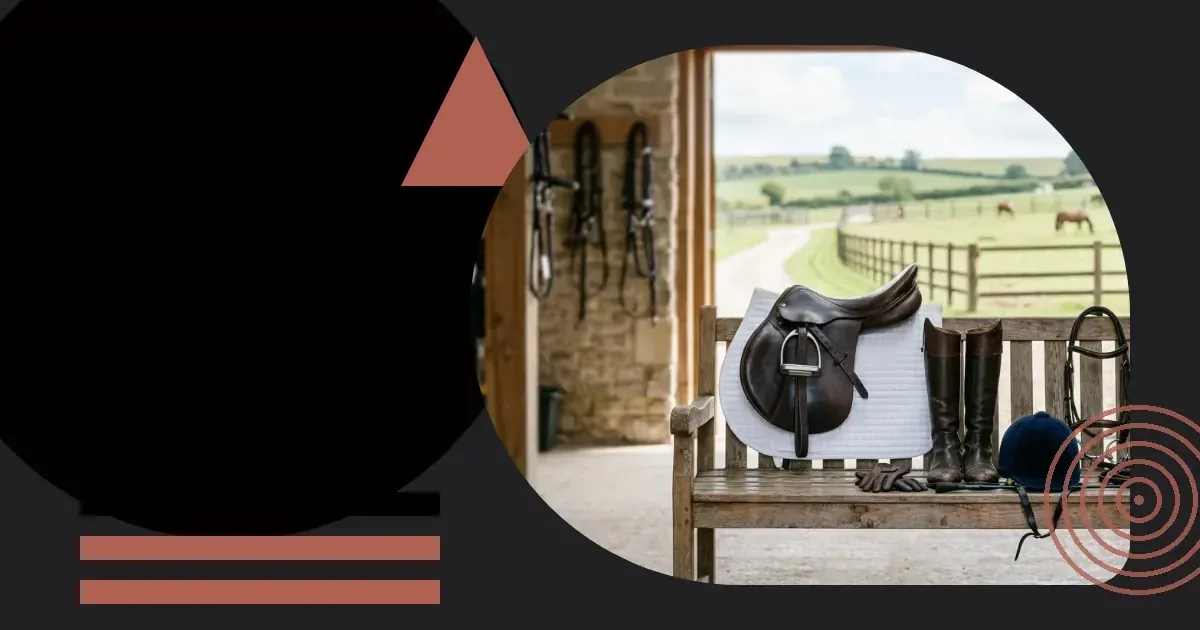
A helmet and boots with a heel are the only two items you must own before your first lesson. Everything else – saddle, bridle, grooming brushes, the horse itself – the club provides. Area 18 Riding walks you through what to buy first, what can wait and what you never need to buy at all.
What you must have before you arrive
A riding helmet is non-negotiable. It must meet current safety standards – look for a label showing compliance with PAS 015 or VG1. A new helmet costs between thirty and one hundred pounds; second-hand ones are a false economy because you cannot see internal damage from a previous fall. Replace any helmet after a fall, even if it looks intact.
Boots with a defined heel prevent your foot sliding through the stirrup. Jodhpur boots or short leather boots work well; the heel should be around an inch high and the sole smooth enough to release from the stirrup quickly. Wellies and trainers are unsafe – the first because the sole is too wide, the second because there is no heel. Your club will not let you ride in either.
What most riders buy within the first month
Jodhpurs or breeches let you grip the saddle without fabric bunching at the knee. Leggings are uncomfortable after twenty minutes and seams in the wrong place will rub. Stretchy jodhpurs cost less than twenty pounds and last through dozens of lessons.
Gloves stop the reins burning your palms and give you a better feel of the horse's mouth. Cheap fabric gloves from a garden centre work as well as specialist riding gloves three times the price. Choose a pair that fits snugly – loose fingertips make it harder to feel what the reins are telling you.
A body protector becomes essential once you start jumping or riding faster work. Many clubs insist on one for any lesson that includes trotting poles or small fences. A new body protector runs to around eighty pounds and must be fitted properly – too loose and it shifts on impact, too tight and it restricts your breathing. Most tack shops will fit one for you at the time of purchase.
When to add each piece
| Item | When you need it | Why it matters |
|---|---|---|
| Helmet | Before your first lesson | Head protection is legally required and no club will lend you one |
| Boots with a heel | Before your first lesson | Prevents your foot being trapped in the stirrup |
| Jodhpurs | After your second or third lesson | Comfort and grip improve quickly |
| Gloves | After your second or third lesson | Protects hands and improves contact with the reins |
| Body protector | Before your first jumping lesson | Required by most clubs for any faster work |
What the club provides
Every riding club owns the tack – saddles, bridles, stirrups and girths – and assigns it to each horse. You will never be asked to bring your own saddle to a group lesson. The instructor will adjust the stirrup length for you and check the girth is tight enough before you mount.
Grooming kit, buckets, yard tools and mounting blocks all belong to the club. Some clubs ask riders to groom their horse before and after a lesson; others have staff who do it. Either way, the brushes and hoof picks are there for you to use. Your first riding lesson explains what happens from the moment you arrive to the moment you leave.
The horses themselves are owned or leased by the club. You pay for the lesson and the use of the horse; you do not pay separately for the animal or its upkeep. That arrangement continues even if you ride the same horse every week for a year.
What you do not need to buy
A whip is handed to you by the instructor when it is needed and collected at the end of the lesson. Spurs are not used in beginner or intermediate lessons and should never be worn without explicit instruction. Both items can cause harm in inexperienced hands.
Your own saddle is unnecessary unless you compete regularly at affiliated level or have a horse of your own. A saddle costs hundreds of pounds and must be fitted to the individual horse's back. The club's saddles are fitted to the club's horses; yours would not be.
Yard clothing – muck-out trousers, waterproofs, steel-toed boots for stable work – only matters if you take on stable duties in exchange for reduced lesson fees. Most riders who attend weekly lessons never need any of it.
How to avoid buying twice
- Try borrowed kit for your first two lessons before you spend anything beyond the helmet and boots – some clubs lend jodhpurs and gloves to newcomers, and you will learn quickly what fits well and what does not.
- Buy a helmet from a shop that will fit it properly and explain the safety labels – online sizing guides are useful but a poor substitute for someone checking the fit in person.
- Choose boots that work off the horse as well as on it – short leather boots or jodhpur boots can be worn for stable work, walking the dog or weekend errands, which justifies the cost.
- Wait until your instructor tells you a body protector is required before you buy one – rushing in at week two means you may buy the wrong size as your posture and confidence change.
What changes as you progress
Once you start competing, a show jacket, light-coloured jodhpurs and long leather boots become necessary for the arena. None of that matters for weekly lessons. A numbercloth, which carries your competition number, is provided by the event organiser on the day.
Riders who move on to dressage need a tailcoat and top hat at advanced levels, but a tweed jacket works for everything up to medium level. Show jumping allows a range of jacket colours at unaffiliated competitions; dressage is stricter. Both disciplines require long boots, which run to over a hundred pounds for leather or around forty for synthetic rubber alternatives.
If you lease or loan a horse, you may be asked to provide some of its tack – usually a bridle, sometimes a saddle. That happens years into riding, not months, and the horse's owner will tell you exactly what is needed. Never assume you must buy tack for a horse you do not own.
Optional upgrades that make a difference
A riding helmet with a dial adjuster at the back gives a more precise fit than one with fixed sizing. Leather gloves last longer than fabric and improve your sensitivity to the reins. Jodhpurs with a silicone grip on the inner leg help you stick to the saddle during faster work. None of these upgrades is necessary, but each makes riding more comfortable once you are certain you will continue.
The helmet is the only piece of safety equipment you should never compromise on – buy new, check the standards label and replace it the moment it takes a knock.
What to ask your club before you buy anything
Ring the club secretary or speak to your instructor at the end of your taster session. Ask whether they lend helmets for taster lessons – some do, though it is rare – and whether they require a body protector from lesson one or only once jumping starts. A few clubs insist on long boots from the beginning; most are happy with short boots or jodhpur boots for the first year. Knowing the club's rules saves you buying something you do not yet need or turning up without something they insist on.
Ask what happens if it rains. Some clubs ride in covered schools whatever the weather; others cancel outdoor lessons in heavy rain. If lessons continue, you will need waterproof trousers and a jacket with sleeves that do not flap. If they cancel, you can ride in light drizzle without special clothing.
Find out whether the club has a second-hand tack shop or a noticeboard where members sell outgrown kit. Jodhpurs and body protectors in good condition turn up regularly, often at half the price of new. Choosing the right club includes questions about these practical details, not only the standard of teaching.
Download PDF: First-time rider kit checklist PDF, 29 KB
Frequently asked questions
Do I need my own saddle to join a riding club?
No. The club provides saddles fitted to its horses and assigns one to you for each lesson. You only need your own saddle if you lease or own a horse.
Can I wear wellies instead of riding boots?
No. Wellies have a sole too wide to release quickly from the stirrup. You need boots with a defined heel of around an inch and a sole narrow enough to slip out in an emergency.
How much should I spend on a riding helmet?
Between thirty and one hundred pounds for a new helmet that meets PAS 015 or VG1 standards. Never buy a second-hand helmet because you cannot see internal damage from a previous fall.
When do I need a body protector?
Before your first jumping lesson or any faster work. Many clubs require one as soon as you start trotting over poles. Ask your instructor – they will tell you when it becomes necessary.
Can I borrow jodhpurs for my first few lessons?
Some clubs lend jodhpurs and gloves to newcomers. Ask the club secretary before your first lesson. If they do not lend kit, stretchy jodhpurs cost less than twenty pounds and are worth buying after your second session.
What should I not buy as a beginner?
Do not buy a whip, spurs, your own saddle, long leather boots or competition clothing. The club provides whips when needed, spurs are not used in beginner lessons and competition kit only matters once you start entering shows.
Do riding gloves have to be specialist ones?
No. Cheap fabric gloves from a garden centre work as well as specialist riding gloves. Choose a snug fit – loose fingertips reduce your feel of the reins.